
Introduction
Imagine Henry VIII, the larger-than-life monarch famous for his six wives and political upheavals, delicately donning a shirt adorned with intricate black silk embroidery. This wasn’t merely a fashion statement but a testament to one of the Tudor court’s most sophisticated decorative arts: blackwork embroidery. What began as a foreign technique brought to English shores by Catherine of Aragon around 1509 would transform into a defining characteristic of Tudor fashion, influencing everyone from noble courtiers to wealthy merchants.
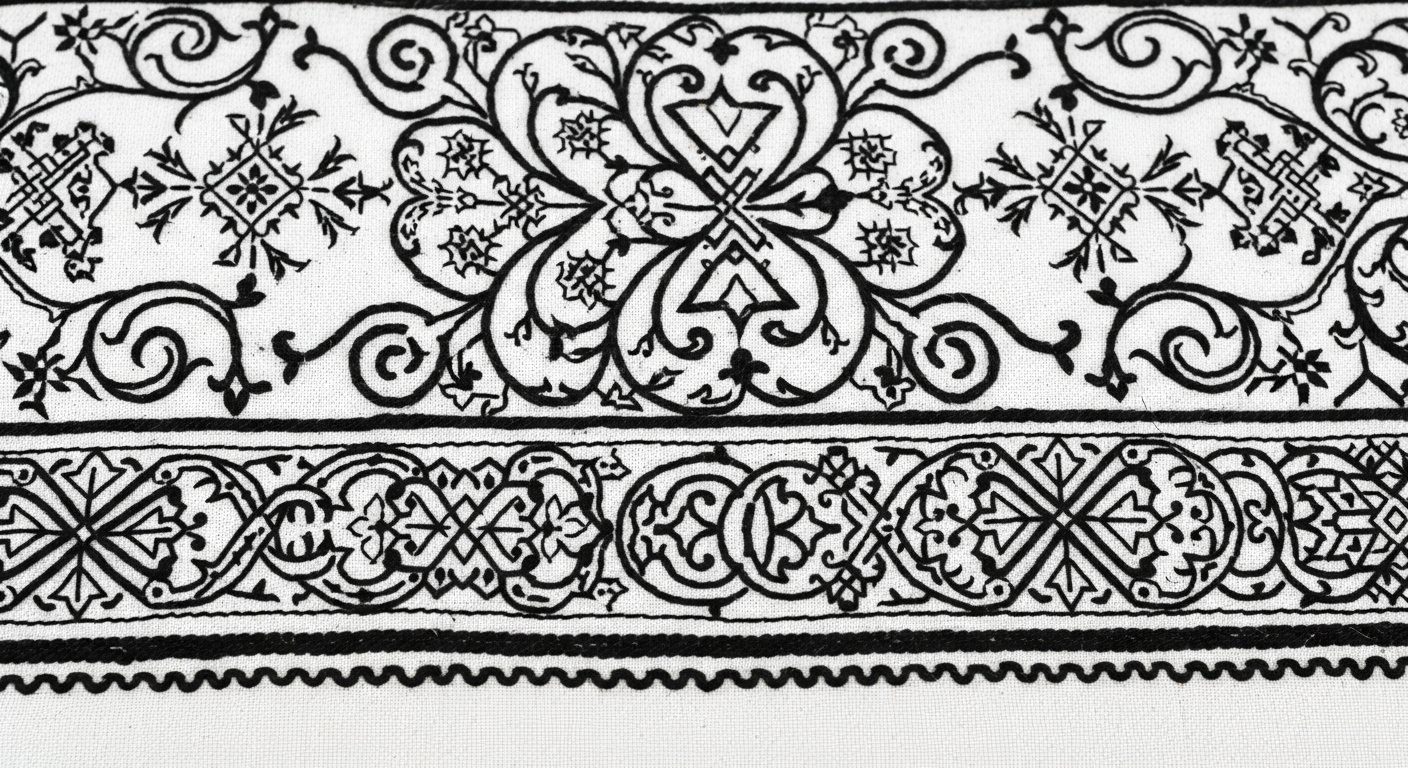
The distinctive Tudor blackwork embroidery technique represented far more than simple decoration. Using black silk thread meticulously stitched onto crisp white linen, craftspeople created elaborate geometric patterns that demonstrated both technical skill and artistic sophistication. This Spanish-influenced art form became so integral to English fashion that it appears prominently in Hans Holbein the Younger’s most famous portraits, including his iconic depiction of Henry VIII around 1537.
Through examining this fascinating intersection of politics, fashion, and craftsmanship, we’ll discover how a young Spanish princess’s cultural heritage became woven into the very fabric of Tudor society, influencing everything from court dress codes to the economic fortunes of skilled embroiderers across England.
Historical Background
Catherine of Aragon’s arrival in England in 1501 marked the beginning of blackwork embroidery’s journey from Spanish court tradition to English fashion phenomenon. Born in 1485 to the powerful Spanish monarchs Ferdinand II of Aragon and Isabella I of Castile, Catherine brought with her not only political alliance but also rich cultural traditions, including the sophisticated needlework techniques practiced in Spanish noble households.
Initially married to Henry’s elder brother Arthur, Prince of Wales, Catherine became a widow within months. Her subsequent marriage to Henry VIII in 1509 placed her at the centre of English court life just as the young king was establishing his reign. During these early years of their marriage, Catherine’s influence on court fashion was profound and largely welcomed. The Spanish queen’s refined tastes and cultural sophistication aligned perfectly with Henry’s desire to create a magnificent court that could rival those of France and the Holy Roman Empire.
The technique itself involved using black silk thread, often imported from the silk-producing regions of Spain and Italy, to create intricate patterns on white linen foundation fabric. These geometric designs drew inspiration from Moorish decorative traditions that had flourished in medieval Spain, creating a unique fusion of Islamic artistic influences and Christian European fashion. The contrast between the stark black thread and pristine white linen created striking visual effects that photographed beautifully in portraits, making it particularly popular among the image-conscious Tudor nobility.
By the 1520s, blackwork had become so established in English fashion that even Henry VIII himself regularly wore blackwork shirts. Contemporary accounts and surviving portraits suggest that the king possessed numerous examples of this decorated clothing, viewing such garments as symbols of sophistication and royal magnificence rather than feminine frivolity.
Significance and Impact
The widespread adoption of blackwork embroidery represented a fascinating example of cultural diplomacy in action. During an era when royal marriages served as crucial political tools, Catherine’s successful introduction of Spanish artistic traditions helped strengthen the cultural bonds between England and Spain. The technique’s popularity at court sent clear signals about the value placed on Spanish culture and, by extension, the Spanish alliance that Henry’s marriage to Catherine represented.
From an economic perspective, the blackwork fashion created new opportunities for skilled craftspeople throughout England. Professional embroiderers found themselves in high demand, while wealthy households invested considerable sums in acquiring the necessary materials and skills. Dorothy K. Burnham’s research in ‘Cut My Cote: A Study of Early English Costume’ demonstrates how blackwork influenced broader patterns in English textile production and consumption, encouraging increased importation of luxury threads and the development of more sophisticated needlework education for both professional and amateur embroiderers.
The social implications were equally significant. Blackwork embroidery required considerable time, skill, and expensive materials, making it an effective marker of social status and economic prosperity. Wearing elaborately decorated clothing became a way of displaying not only wealth but also cultural sophistication and connection to court fashion. This created a ripple effect throughout Tudor society, as successful merchants and rising gentry families sought to emulate court styles and demonstrate their own aspirations to higher social standing.
Perhaps most importantly, blackwork embroidery contributed to the evolution of English decorative arts. The geometric patterns and precise stitching techniques influenced other forms of English needlework and decorative arts throughout the sixteenth century and beyond. This cross-pollination of Spanish and English artistic traditions helped create distinctive Tudor aesthetic styles that remain recognisable and influential today.
Connections and Context
The rise of blackwork embroidery coincided with broader cultural and political developments that shaped Tudor England. During the 1510s and 1520s, when the technique reached peak popularity, Henry VIII was actively cultivating relationships with continental European powers and seeking to establish England as a major cultural and political force. The adoption of Spanish fashion traditions fitted perfectly with these broader diplomatic and cultural ambitions.
Interestingly, blackwork’s popularity persisted even as Henry’s marriage to Catherine deteriorated during the 1520s and 1530s. Despite the king’s growing frustration with Catherine’s failure to produce a male heir and his eventual decision to seek an annulment, the fashion she had introduced remained firmly established in English court culture. This suggests that blackwork had transcended its origins as a specifically Spanish tradition to become genuinely integrated into English fashion sensibilities.
The technique also connects to broader patterns in Tudor material culture and consumption. The sixteenth century witnessed significant changes in English attitudes towards luxury goods, foreign imports, and fashion. Blackwork embroidery participated in these larger trends towards increased consumption of decorative objects and greater attention to personal appearance and display. The same impulses that drove the construction of magnificent Tudor palaces and the commissioning of elaborate portraits also supported the popularity of intricate needlework.
Modern Relevance and Fascinating Details
Contemporary fashion historians and textile artists continue to study and reproduce Tudor blackwork techniques, drawn by both their historical significance and their striking visual appeal. Modern analyses using advanced imaging techniques have revealed the extraordinary sophistication of sixteenth-century embroiderers, who achieved remarkable precision and consistency using only basic tools and natural lighting. These studies demonstrate that Tudor craftspeople possessed technical skills that rival those of contemporary artisans using modern equipment.
Did you know that surviving examples of Tudor blackwork reveal fascinating details about the daily lives of their wearers? Careful examination of shirts and smocks preserved in museum collections shows patterns of wear, repair, and alteration that illuminate how these expensive garments were maintained and adapted over many years of use. Some pieces show evidence of being passed down through generations, with modifications made to accommodate different body sizes or changing fashion preferences.
In popular culture and historical fiction, blackwork embroidery has become a visual shorthand for Tudor sophistication and authenticity. Television productions and films set in the period often feature elaborate blackwork costumes, while historical fiction authors frequently reference the technique when describing court fashion and social distinctions. This enduring fascination reflects both the visual appeal of the designs and their effectiveness as markers of historical period and social status.
Conclusion
The story of Tudor blackwork embroidery illuminates the complex ways that personal relationships, political alliances, and cultural exchange shaped Renaissance England. What began as Catherine of Aragon’s introduction of familiar Spanish traditions evolved into a distinctively English fashion phenomenon that influenced decades of court culture and artistic development.
From Henry VIII’s decorated shirts to the geometric patterns preserved in Holbein’s portraits, blackwork embroidery represents a tangible connection to the sophisticated material culture of Tudor England. By examining such seemingly decorative details, we gain deeper insights into the political, economic, and cultural forces that shaped one of English history’s most fascinating periods. The black silk threads stitched onto white linen created more than beautiful patterns; they wove together the complex story of Tudor court life, international diplomacy, and artistic innovation.