
Introduction
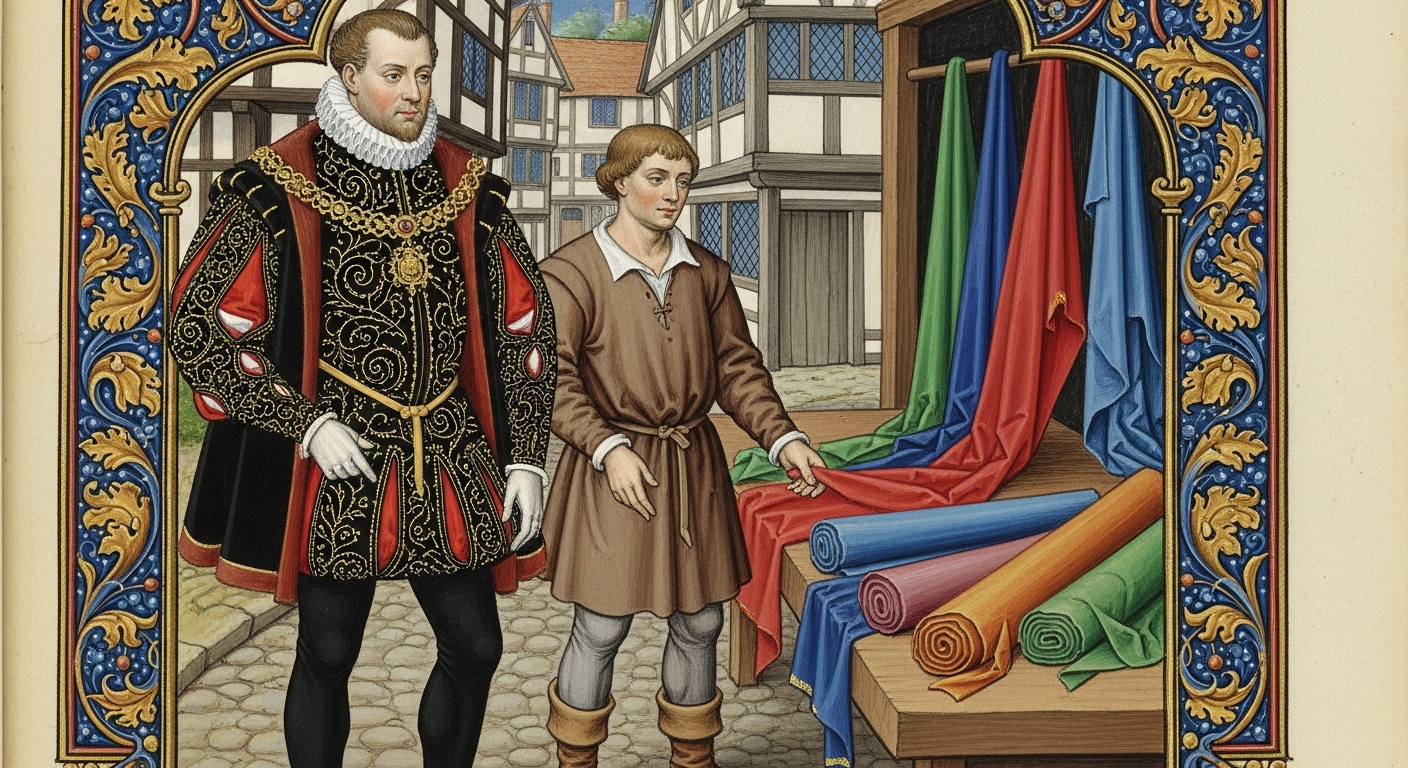
In 1533, during the tumultuous reign of Henry VIII, wearing the wrong fabric could cost you several weeks’ wages and strip you of your precious garment. The Tudor sumptuary laws of that year specifically decreed that velvet doublets were forbidden to anyone below the rank of knight, with violations punishable by a hefty fine of 10 shillings plus forfeiture of the offending item. This wasn’t merely fashion policing – it was social engineering at its most direct.
These clothing regulations reveal a fascinating aspect of Tudor society: the Crown’s desperate attempts to maintain rigid social hierarchies through what people wore. At a time when Henry VIII was reshaping England’s religious landscape and asserting royal supremacy, controlling fashion became another tool of power. The 1533 sumptuary laws offer us a window into the anxieties of Tudor England, where social mobility threatened traditional structures and the very fabric of one’s clothing could signal dangerous ambitions.
Understanding these laws illuminates not just Tudor fashion history, but the broader social tensions of 16th-century England – from economic pressures on the emerging merchant class to the Crown’s financial needs and the complex relationship between appearance, authority, and social order.
Historical Background
The 1533 sumptuary laws emerged during a pivotal period in Henry VIII’s reign, coinciding with his break from Rome and marriage to Anne Boleyn. These regulations were part of a broader legislative programme aimed at reinforcing social distinctions that seemed increasingly under threat. The Statutes of the Realm, Volume 3 records these laws in meticulous detail, demonstrating the Crown’s serious intent to regulate every aspect of dress according to social rank.
The specific prohibition on velvet doublets for those below knightly rank was particularly significant because doublets were the most visible outer garment worn by men of all social classes. Velvet, imported primarily from Italy and Flanders, represented luxury and wealth – qualities that the nobility wished to reserve for themselves. A craftsman earning perhaps 12 to 15 shillings per month would face a devastating financial penalty if caught wearing velvet, making the 10-shilling fine genuinely prohibitive.
These laws weren’t created in isolation. England in the 1530s was experiencing significant economic and social change. The wool trade had created new wealth among merchants and craftsmen, whilst the early stages of the Dissolution of the Monasteries would soon redistribute vast amounts of land and property. Traditional markers of social status were becoming blurred as nouveaux riches sought to display their prosperity through increasingly elaborate clothing.
The enforcement mechanism was equally telling. Local magistrates and officials were empowered to stop and examine anyone’s clothing, creating a system where one’s garments served as a form of social passport. The combination of financial penalty and public humiliation – losing one’s expensive garment – was designed to make the consequences memorable and deterrent to others considering similar transgressions.
Significance and Impact
The 1533 sumptuary laws represented far more than royal vanity or fashion consciousness – they were a crucial tool in maintaining Tudor England’s hierarchical social structure. By controlling access to luxury fabrics like velvet, the Crown sought to preserve visual markers that instantly communicated social rank. In an era when literacy rates remained low and social mobility was increasing, clothing served as an immediate, universally understood language of status.
The economic implications were equally significant. These laws functioned as a form of protectionism for the established nobility whilst simultaneously generating revenue for the Crown. The 10-shilling fines represented substantial income when multiplied across numerous violations, contributing to royal finances during Henry VIII’s expensive reign. Moreover, by restricting demand for luxury imports among the middle classes, the laws helped control England’s balance of trade with continental Europe.
For Tudor society, these regulations created a complex dynamic between aspiration and restriction. Successful merchants and skilled craftsmen found themselves in the peculiar position of possessing the wealth to afford velvet but lacking the legal right to wear it. This tension contributed to the growing desire for social advancement and the eventual development of new forms of wealth display that circumvented sumptuary restrictions.
The psychological impact on Tudor subjects was profound. Clothing became a constant reminder of one’s place in the social hierarchy, reinforcing deference to superiors whilst potentially breeding resentment among those whose economic success exceeded their social recognition. As noted in Aileen Ribeiro’s Dress and Morality, these laws created a visible tension between emerging capitalist wealth and traditional aristocratic privilege.
Connections and Context
The 1533 sumptuary laws must be understood within the broader context of Henry VIII’s revolutionary decade. The same parliamentary session that restricted velvet doublets also passed the Act of Succession, legitimising Henry’s marriage to Anne Boleyn and declaring their children heirs to the throne. This wasn’t coincidental – both measures aimed to establish and maintain hierarchies, whether dynastic or social.
The timing also connects to Henry’s growing financial pressures. His court remained one of Europe’s most magnificent, requiring enormous expenditure on display and ceremony. By restricting luxury consumption among the broader population, the Crown could maintain the exclusive magnificence that legitimised royal authority whilst ensuring that imported luxuries remained concentrated among the politically important elite.
Interestingly, these clothing restrictions paralleled similar laws across Europe. France, Spain, and the German states all implemented comparable regulations during this period, suggesting that the challenges of maintaining social order through dress codes were widespread. However, England’s laws were notably specific and well-enforced compared to many continental equivalents, reflecting the Tudor monarchy’s particular talent for detailed administration.
Modern Relevance and Fascinating Details
The Tudor sumptuary laws offer remarkable parallels to modern debates about wealth display and social signalling. Just as a velvet doublet once communicated dangerous social ambition, today’s luxury brands serve similar functions in displaying and restricting access to status symbols. The fundamental human desire to signal success through appearance remains unchanged, though the specific items and restrictions have evolved considerably.
Did you know that some Tudor-era entrepreneurs found creative ways around these restrictions? Wealthy merchants would sometimes employ elaborate embroidery, expensive furs, or imported silks that weren’t specifically prohibited, leading to an arms race of luxury alternatives. This cat-and-mouse game between regulators and fashion-conscious consumers mirrors modern tax avoidance strategies or the ways people circumvent dress codes today.
Historical fiction writers often overlook the dramatic potential of sumptuary law violations, yet they provided perfect opportunities for character development and social conflict. A merchant’s son caught wearing velvet could face not just financial ruin but social disgrace, family shame, and the loss of valuable business connections – rich material for any novelist exploring Tudor England’s complex social dynamics.
Conclusion
The 1533 prohibition on velvet doublets reveals Tudor England as a society in transition, where traditional aristocratic privilege clashed with emerging mercantile wealth. These laws demonstrate the Crown’s sophisticated understanding of how material culture reinforced political power, using fashion as a tool of social control with remarkable precision and effectiveness.
For modern readers, these regulations illuminate the eternal tension between individual expression and social order, between aspiration and authority. They remind us that the clothes we wear have always carried political meaning, and that seemingly simple fashion choices can reveal profound truths about power, identity, and social change. The next time you see a period drama or read Tudor historical fiction, remember that every garment carried legal and social implications that could dramatically alter a character’s fate – making the choice of a velvet doublet a potentially life-changing decision.