
Introduction
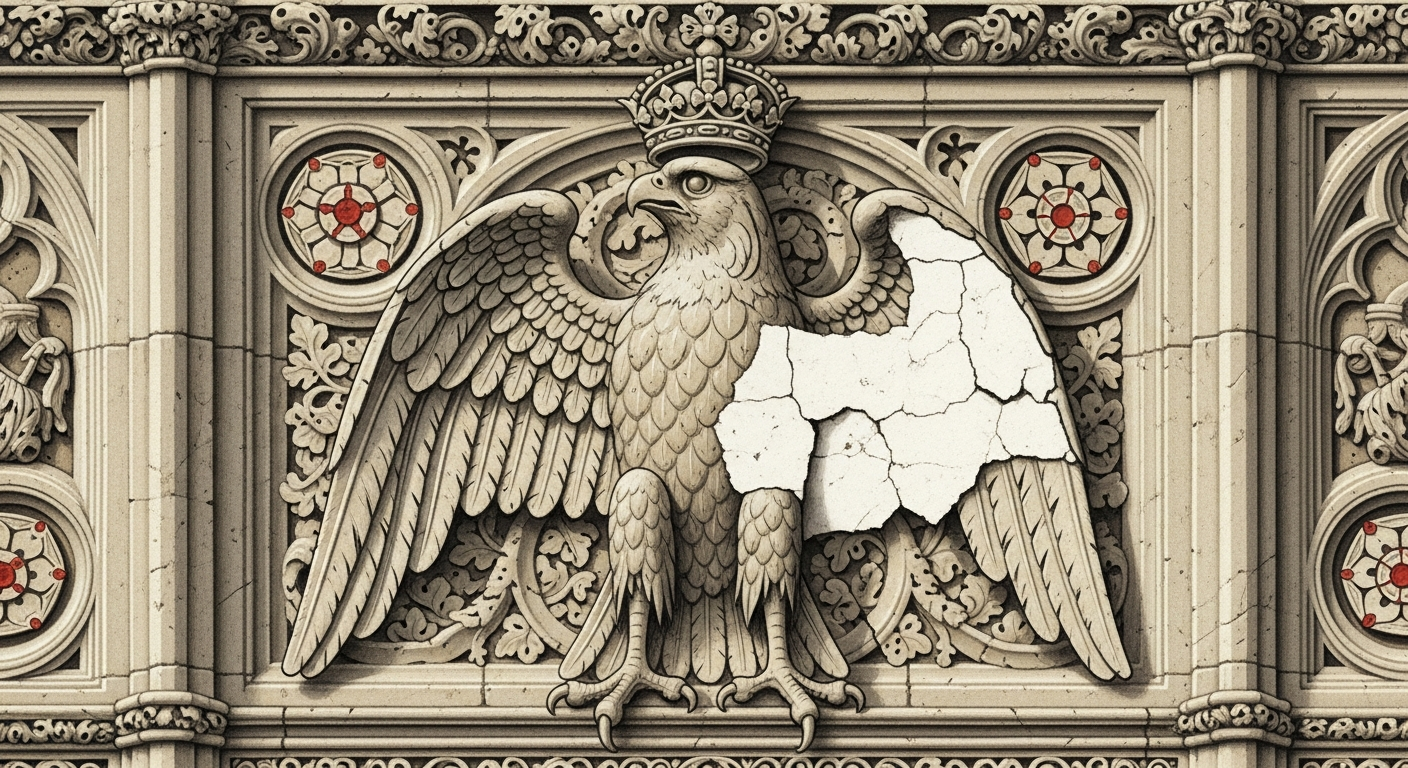
Hidden beneath layers of sixteenth-century plaster at Hampton Court Palace lie the ghostly remains of Anne Boleyn’s falcon badge, carefully concealed rather than destroyed in the frantic efforts to erase the executed queen from history. These carved emblems, entombed within the palace walls, represent one of Tudor England’s most dramatic attempts at historical revisionism and offer us a remarkable window into the politics of royal iconography.
When Anne Boleyn lost her head on 19 May 1536, Henry VIII’s determination to obliterate her memory extended far beyond the Tower of London’s scaffold. The systematic removal of her personal symbols from royal residences became a matter of urgent political necessity, yet the practicalities of Tudor-era demolition work have preserved unexpected archaeological treasures for modern historians to discover.
This fascinating episode reveals not only the extent of Henry’s paranoia following Anne’s execution but also illuminates the crucial role that heraldic symbols played in Tudor political messaging, the challenges of rewriting history in an age before mass media, and the remarkable survival of evidence that continues to reshape our understanding of this pivotal moment in English history.
Historical Background
Anne Boleyn’s falcon badge was far more than decorative heraldry; it represented her meteoric rise from minor nobility to Queen of England and her central role in the English Reformation. The crowned falcon perched upon a golden stump with Tudor roses was prominently displayed throughout the royal palaces during her brief reign from 1533 to 1536, carved into stonework, painted on walls, and woven into tapestries as a constant reminder of her elevated status.
The badge’s symbolism was carefully constructed to legitimise Anne’s controversial position. The falcon represented nobility and hunting prowess, whilst the crown emphasised her royal status despite her relatively modest background as the daughter of Thomas Boleyn, Earl of Wiltshire. The golden tree stump, from which new growth emerged, symbolised the renewal of the Tudor dynasty through her anticipated male heirs.
Hampton Court Palace, acquired by Henry VIII from Cardinal Wolsey in 1529, had been extensively redecorated to accommodate Anne’s rising status even before their secret marriage in late 1532 or early 1533. The palace’s Great Hall, royal apartments, and courtyards featured numerous examples of her heraldic symbols, intertwined with Henry’s own badges in a visual celebration of their union and shared royal authority.
However, Anne’s failure to produce a male heir, combined with Henry’s growing infatuation with Jane Seymore and the political machinations surrounding her downfall, transformed these once-celebratory symbols into dangerous reminders of a marriage the king was desperate to forget. Eric Ives, in his authoritative biography ‘The Life and Death of Anne Boleyn’ (2004), documents how swiftly Henry moved to eliminate all traces of his second wife following her execution for alleged adultery, incest, and treason.
Significance and Impact
The systematic destruction of Anne Boleyn’s heraldic symbols represented one of history’s most comprehensive attempts at damnatio memoriae, the deliberate erasure of a person from official records and public memory. This practice, borrowed from ancient Roman traditions, demonstrated the absolute power of Tudor monarchy whilst simultaneously revealing Henry’s psychological need to justify his actions through historical revisionism.
The political implications of this iconoclastic campaign were profound. By removing Anne’s symbols from public view, Henry sought to legitimise his third marriage to Jane Seymore whilst retroactively casting doubt on the validity of his relationship with Anne. This visual propaganda campaign supported the legal fiction that his marriage to Anne had been invalid from the beginning, thereby bastardising their daughter Elizabeth and clearing the path for future male heirs.
The practical challenges of this erasure campaign, however, proved more complex than Henry might have anticipated. Stone carving was expensive and time-consuming work, requiring skilled craftsmen to carefully chisel away existing heraldry without damaging the underlying structure. In many cases, as the Historic Royal Palaces Archives reveal, palace administrators opted for the more economical solution of simply covering offending symbols with plaster and paint rather than undertaking costly demolition work.
This pragmatic approach to historical revisionism had unintended consequences for modern historians. The decision to conceal rather than destroy has preserved remarkable evidence of Anne’s brief but significant impact on royal iconography, providing tangible proof of her status and influence that written records alone cannot convey. These hidden symbols serve as a physical testament to the political volatility of Henry’s court and the dangerous impermanence of royal favour.
Connections and Context
The destruction of Anne Boleyn’s heraldic symbols occurred alongside other significant political and religious changes that characterised the turbulent 1530s. Henry’s break with Rome, the Dissolution of the Monasteries, and the establishment of royal supremacy over the English Church created an atmosphere of constant change and uncertainty that extended to the visual culture of the royal court.
This campaign of erasure was not unique to Anne Boleyn. Thomas Wolsey’s symbols had been systematically removed from Hampton Court following his fall from grace in 1529, establishing a precedent for the elimination of politically inconvenient figures from the palace’s decorative scheme. Similarly, Henry would later order the removal of symbols associated with Thomas Cromwell following his execution in 1540, demonstrating that no one, regardless of their previous service to the crown, was immune from posthumous obliteration.
The timing of Anne’s erasure also coincided with preparations for Henry’s marriage to Jane Seymore on 30 May 1536, just eleven days after Anne’s execution. The hasty removal of the previous queen’s symbols formed part of a broader redecoration campaign designed to welcome the new queen whilst eliminating uncomfortable reminders of her predecessor’s fate. This rapid transformation of the palace’s visual identity reflected the speed with which Tudor political fortunes could change and the monarchy’s ability to reshape official memory to suit contemporary needs.
Modern Relevance and Fascinating Details
The discovery of hidden Tudor symbols beneath later decoration has become increasingly common as modern conservation techniques allow historians and archaeologists to peer beneath centuries of accumulated paint and plaster. Advanced imaging technology, including X-ray photography and infrared spectroscopy, continues to reveal new examples of concealed royal heraldry at palaces throughout England, providing fresh insights into the politics of Tudor visual culture.
Did you know that some of Anne Boleyn’s symbols were so hastily covered that modern conservators can still make out the original carving through thin layers of sixteenth-century plaster? These partially visible emblems create an almost ghostly presence in rooms where visitors once celebrated the queen’s marriage and later witnessed the systematic attempt to erase her memory.
The survival of these hidden symbols has profoundly influenced popular culture’s fascination with Anne Boleyn, inspiring countless historical novels, television dramas, and films that explore themes of political manipulation and historical revisionism. As a historical fiction author, I find these concealed badges particularly compelling because they represent the gap between official history and lived experience, the difference between what powerful figures wanted us to remember and what actually occurred.
Modern visitors to Hampton Court Palace can participate in specially guided tours that highlight locations where Anne’s symbols once appeared, though the hidden examples beneath plaster remain inaccessible to general visitors. The palace’s interpretation now acknowledges this complex history, presenting Anne’s story alongside evidence of Henry’s attempts to erase her memory rather than accepting the sanitised version of events that Henry preferred.
Conclusion
The hidden falcon badges of Hampton Court Palace serve as powerful reminders that history is often written by the victors, but physical evidence can survive even the most determined attempts at erasure. Henry VIII’s systematic destruction of Anne Boleyn’s heraldic symbols reveals the crucial importance of visual propaganda in Tudor politics whilst demonstrating the practical limitations of sixteenth-century historical revisionism.
These concealed emblems invite us to consider what other stories lie hidden beneath the surface of official history, waiting for modern technology and historical inquiry to bring them back to light. They remind us that even absolute monarchs could not entirely control historical memory, and that the truth has a remarkable ability to survive, even when plastered over and forgotten for nearly five centuries.