
Introduction
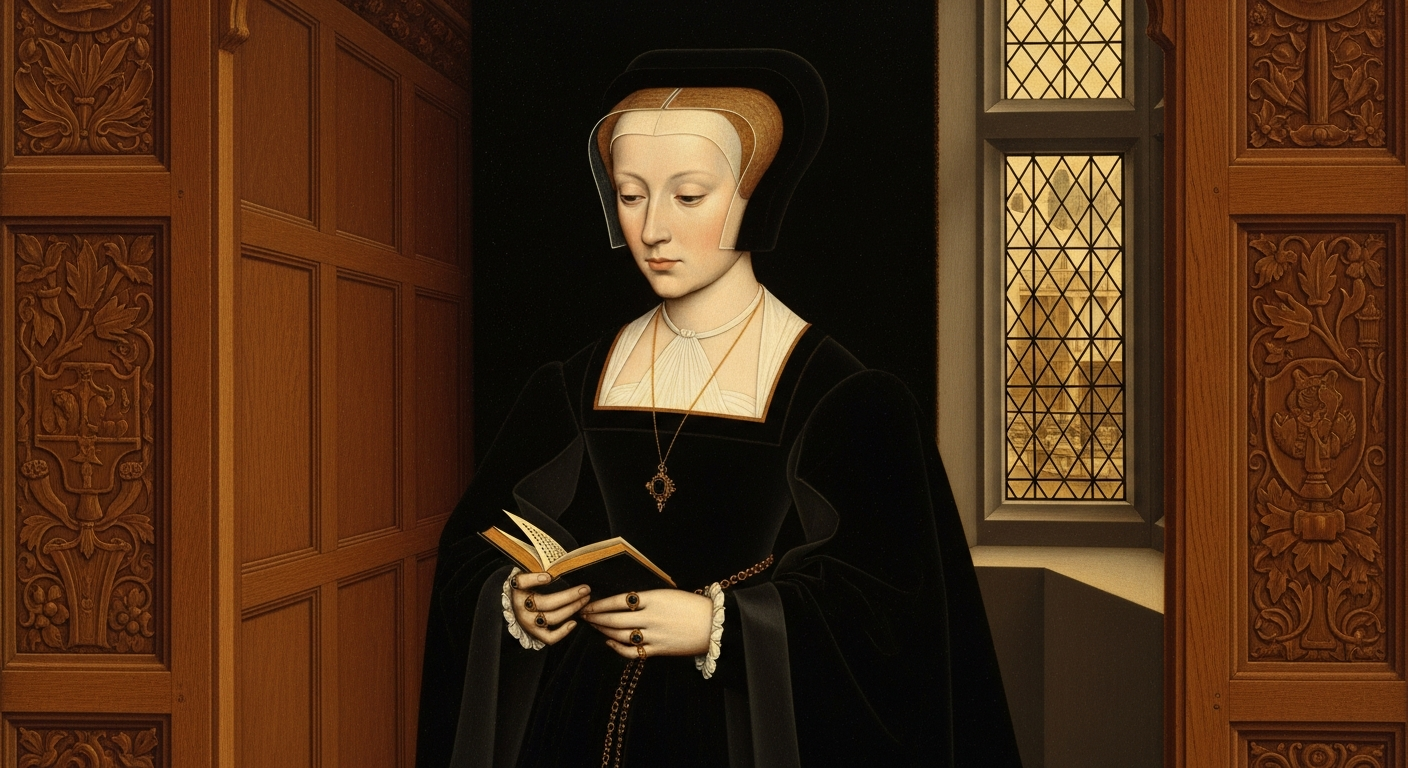
Imagine being told you’re suddenly the Queen of England, only to faint from shock and later face execution for a crown you never wanted. This was the tragic reality for Lady Jane Grey, the brilliant 16-year-old scholar who became England’s shortest-reigning monarch in July 1553. Her story reads like a Tudor thriller: political manipulation, forced marriage, religious upheaval, and ultimately, a young woman’s death at the hands of those who should have protected her.
Jane Grey’s nine-day reign represents one of history’s most cynical power grabs, orchestrated by ambitious nobles who used a teenage girl as a pawn in their deadly game for control of England. Her brief time on the throne occurred during one of the most turbulent periods of the Tudor era, when religious divisions threatened to tear the realm apart and succession disputes could spark civil war.
Understanding Jane’s story reveals the brutal realities of Tudor politics, where even royal blood offered no protection from the scaffold, and where young women’s lives were routinely sacrificed on the altar of male ambition. Her tale illuminates not just the mechanics of a failed coup, but the human cost of political machinations in one of England’s most fascinating dynasties.
Historical Background
Lady Jane Grey was born around 1537, the eldest daughter of Henry Grey, Duke of Suffolk, and Frances Brandon. Her royal blood came through her grandmother Mary Tudor, sister of Henry VIII, making Jane the king’s great-niece and placing her in the line of succession after Henry’s children. This genealogy would prove both her passport to the throne and her death warrant.
The key architect of Jane’s brief reign was John Dudley, Duke of Northumberland, who had risen to become Lord President of the Council during the reign of the sickly young Edward VI. As the Protestant king lay dying in 1553, Northumberland faced a terrifying prospect: Edward’s Catholic half-sister Mary would inherit the crown and likely restore England to papal authority, destroying everything the Reformation had achieved. Even more personally threatening, Mary would almost certainly execute Northumberland for his role in Protestant reforms.
In a desperate bid to maintain power, Northumberland orchestrated a complex plan. He convinced the dying Edward VI to alter the succession through his ‘Devise for the Succession,’ bypassing both Mary and Elizabeth in favour of Jane Grey. To cement his control, Northumberland arranged Jane’s marriage to his fourth son, Guildford Dudley, in a lavish ceremony at Durham House on 25 May 1553. Contemporary sources, including the Chronicle of Queen Jane, reveal that Jane was given little choice in this union, which occurred mere weeks before her proclamation as queen.
When Edward VI died on 6 July 1553, the wheels of Northumberland’s conspiracy began turning. Jane was summoned to Syon House, where she was informed of her new status. According to eyewitness accounts recorded in the Chronicle of Queen Jane, Jane’s reaction was far from jubilant: she reportedly ‘swooned’ upon hearing the news and later declared that she was ‘insufficient’ for such a role. On 10 July 1553, Jane was proclaimed queen at the Tower of London, though significantly, the proclamation received a lukewarm response from Londoners, many of whom remained loyal to Mary Tudor’s legitimate claim.
Significance and Impact
Jane Grey’s reign, though lasting only nine days, had profound implications for the Tudor monarchy and English society. Her brief rule represented the first serious challenge to the established principle of legitimate succession since the Wars of the Roses. The crisis demonstrated that even with control of the capital and the machinery of government, power ultimately rested with popular consent and traditional legitimacy.
The religious dimension of Jane’s reign cannot be understated. As historian Eric Ives notes in his comprehensive study ‘Lady Jane Grey: A Tudor Mystery,’ her Protestant credentials were central to Northumberland’s plan. Jane was exceptionally well-educated for her time, fluent in Latin, Greek, and Hebrew, and a committed evangelical Protestant. Her potential reign represented the continuation of Edward VI’s religious reforms and the prevention of Catholic restoration under Mary Tudor.
However, the failure of Jane’s reign ultimately accelerated the very outcome Northumberland sought to prevent. Mary Tudor’s successful counter-coup not only restored Catholic monarchy but demonstrated the resilience of Tudor legitimacy. The episode proved that religious considerations alone could not override the powerful combination of legal succession and popular support that Mary commanded, particularly outside London.
The human cost of this political gamble was severe. Jane’s execution in February 1554 marked her as the youngest person ever executed for treason in English history. Her death, along with that of her husband Guildford Dudley, illustrated the brutal consequences of political manipulation in Tudor England. The tragedy was compounded by the fact that Mary had initially shown mercy towards Jane, recognising her as a victim of others’ ambitions until Wyatt’s Rebellion made her continued existence too dangerous to tolerate.
Connections and Context
Jane Grey’s story intersects with numerous significant Tudor narratives. Her reign occurred during the broader context of the English Reformation’s most uncertain period. Edward VI’s Protestant reforms had created a generation of committed evangelicals who feared Catholic restoration, whilst simultaneously alienating traditional Catholics who had never accepted Henry VIII’s break with Rome. Jane’s brief rule represented the Protestant faction’s last desperate attempt to maintain religious control.
The crisis also illuminated the ongoing tensions surrounding female rule in Tudor England. Ironically, whilst Northumberland used Jane’s royal blood to justify her claim, his machinations inadvertently paved the way for England’s first successful female monarchs. Mary Tudor’s triumph in 1553 established precedent for female sovereignty that would later benefit Elizabeth I, though both sisters would face ongoing challenges to their authority based on gender.
Jane’s fate was also connected to the broader European religious conflicts of the 1550s. Her potential reign would have maintained England’s alignment with Protestant powers like the German princes, whilst Mary’s restoration brought England back into the Catholic Habsburg sphere of influence through her marriage to Philip II of Spain. The failed coup thus had international implications beyond England’s borders.
Did you know that Jane Grey was likely the most intellectually accomplished of all Tudor monarchs? Her tutor John Aylmer praised her extraordinary linguistic abilities, and Roger Ascham famously found her reading Plato in Greek whilst her family hunted, declaring she found more pleasure in scholarly pursuits than others found in worldly pleasures.
Modern Relevance and Fascinating Details
Jane Grey’s story continues to fascinate modern audiences because it combines several timeless themes: the vulnerability of youth to adult manipulation, the clash between personal desire and political necessity, and the question of whether individuals can be held responsible for crimes they were essentially forced to commit. Her tale resonates particularly strongly in discussions about the agency of young women in patriarchal societies.
Contemporary feminist historians have reexamined Jane’s story, questioning traditional narratives that portrayed her merely as a victim. Some evidence suggests Jane may have been more politically aware and committed to Protestant causes than previously thought. Her letters from the Tower demonstrate remarkable courage and theological sophistication, suggesting a young woman who, whilst certainly manipulated, may have ultimately embraced her role as a Protestant martyr.
Jane’s story has inspired numerous works of historical fiction, from Alison Weir’s ‘Innocent Traitor’ to television adaptations that explore the human dimensions of her tragedy. Her brief reign offers historical novelists a perfect combination of political intrigue, religious conflict, and personal drama, all compressed into a timeframe that allows for intense narrative focus.
Perhaps most remarkably, Jane Grey remains the only English monarch whose signature on official documents exists for fewer than ten days. Her few surviving autographs from July 1553, signed ‘Jane the Quene,’ represent some of the rarest royal manuscripts in existence, tangible proof of one of history’s most extraordinary and brief reigns.
The Tower of London, where Jane was both crowned and executed, still displays exhibits related to her story. Visitors can see the supposed location of her execution and view contemporary accounts of her final moments, when she reportedly forgave her executioner and declared her innocence before placing her head on the block.
Conclusion
Lady Jane Grey’s nine-day reign stands as one of the most poignant examples of political manipulation in English history. Her story reveals the deadly intersection of religious conflict, dynastic politics, and personal ambition that characterised the Tudor era. Whilst her reign failed to achieve its architects’ goals, it inadvertently strengthened the principle of legitimate succession and demonstrated the limits of political engineering in the face of popular will.
Jane’s tragedy reminds us that behind the grand narratives of Tudor history were real individuals whose lives were shaped by forces beyond their control. Her intelligence, courage, and ultimate fate continue to inspire both scholarly investigation and popular imagination. For anyone seeking to understand the complexities of Tudor politics, the brutal realities of sixteenth-century power struggles, or simply the story of a remarkable young woman caught in impossible circumstances, Jane Grey’s brief but significant reign offers invaluable insights into one of England’s most turbulent periods.