
The Hidden Language of Faith: How the Pomegranate Became a Secret Catholic Symbol in Tudor England
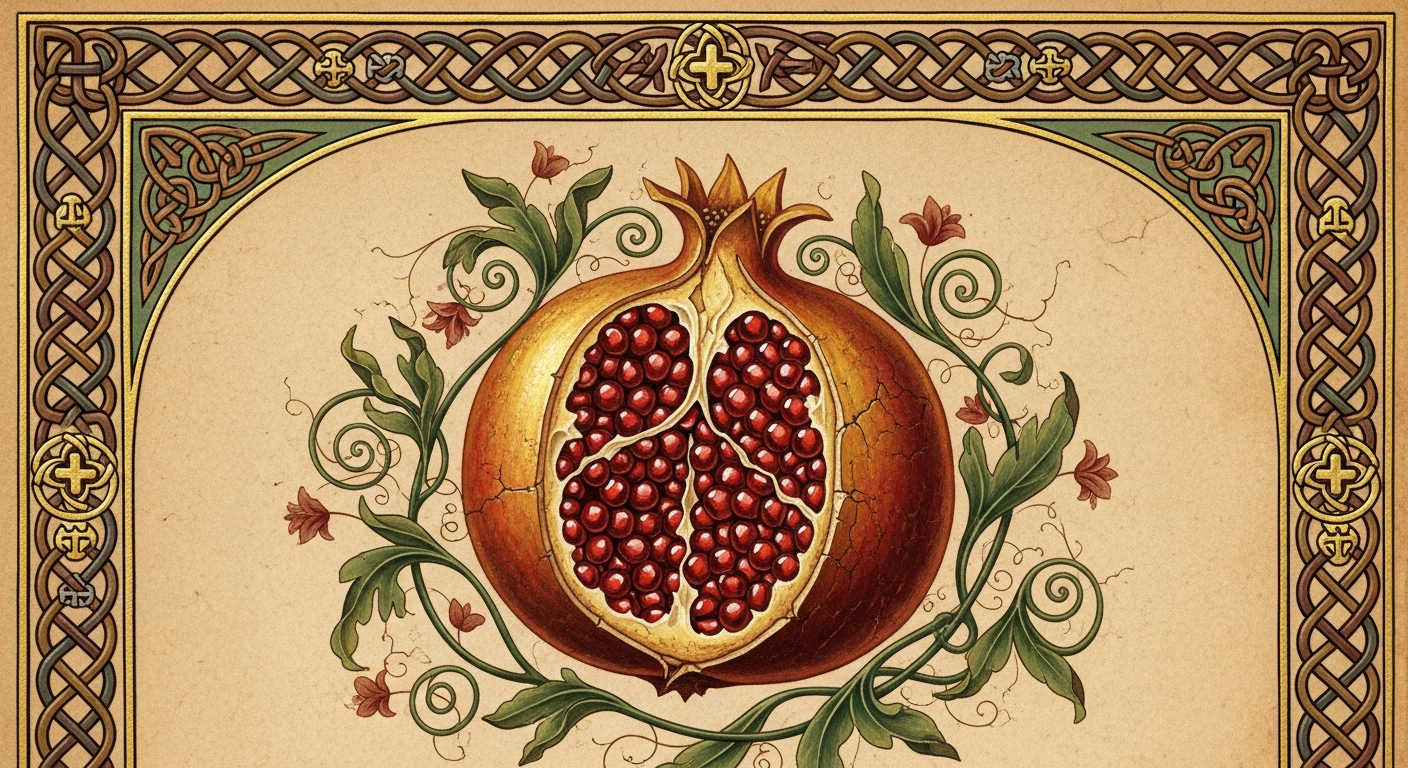
In the shadowy world of Tudor religious persecution, where the wrong word could mean death and the wrong symbol could spell disaster, English Catholics developed an extraordinary system of hidden communication. Among the most intriguing of these secret signals was an unlikely fruit that had once graced royal coats of arms and now whispered of forbidden faith: the pomegranate. What began as Catherine of Aragon’s personal emblem, inherited by her daughter Mary I, may have transformed into a covert badge of Catholic identity during Elizabeth I’s Protestant reign.
The story of how a simple fruit became a symbol of resistance reveals the ingenious ways in which persecuted communities adapt and survive. When public displays of Catholic faith became dangerous after Elizabeth I’s settlement of 1559, believers needed new methods to identify one another and maintain their spiritual connections. The pomegranate, with its rich history of royal patronage and religious symbolism, offered the perfect solution: a symbol innocent enough to escape Protestant suspicion, yet meaningful enough to unite a scattered community of recusants.
This fascinating chapter in Tudor history illustrates not only the creativity born from desperation but also the enduring power of symbols to transcend political boundaries and religious persecution. By examining the pomegranate’s journey from royal emblem to secret sign, we uncover a hidden narrative of faith, resistance, and survival that has remained largely unexplored until recent scholarly investigations.
Historical Background: From Spanish Princess to Catholic Martyr
The pomegranate’s journey into English Catholic symbolism began with Catherine of Aragon, who brought this ancient symbol of fertility and abundance from her Spanish homeland when she married Prince Arthur in 1501. The fruit held deep significance in Spanish heraldry, representing the kingdom of Granada and the Catholic Monarchs’ triumph over Islamic rule. When Catherine later married Henry VIII in 1509, the pomegranate became permanently embedded in English royal iconography, appearing on everything from architectural details at Hampton Court Palace to illuminated manuscripts celebrating the Tudor dynasty.
Catherine’s daughter, Mary I, naturally inherited this maternal symbol, and during her brief reign from 1553 to 1558, the pomegranate experienced a renaissance in English decorative arts. Mary’s restoration of Catholicism saw the fruit appear frequently in church decorations, royal portraiture, and courtly ceremonies. The pomegranate’s association with fertility resonated particularly strongly during Mary’s reign, as courtiers and subjects hoped desperately that the queen would produce a Catholic heir to secure the faith’s future in England.
However, Mary’s death in 1558 brought her Protestant half-sister Elizabeth to the throne, fundamentally altering England’s religious landscape. The Elizabethan Religious Settlement of 1559 re-established Protestant supremacy, making Catholic practices increasingly dangerous. Public masses were forbidden, Catholic priests faced execution, and recusants (those who refused to attend Protestant services) faced heavy fines and social ostracism. It was in this hostile environment that symbols like the pomegranate began to acquire new, clandestine meanings.
Archaeological evidence from the Victoria and Albert Museum’s Tudor and Jacobean decorative arts collection suggests that pomegranate motifs appeared with surprising frequency in household items and personal jewellery throughout Elizabeth’s reign. While this could represent mere artistic continuity from earlier periods, Michael Questier’s research in ‘Catholicism and Community in Early Modern England’ (2006) suggests something more deliberate may have been occurring: the systematic adoption of pomegranate imagery by Catholic communities as a form of coded communication.
Significance and Impact: The Power of Silent Symbols
The potential use of pomegranate symbolism by Elizabethan Catholics represents a remarkable adaptation to religious persecution. In an age when attending mass could result in imprisonment and harbouring priests meant death, subtle visual cues became essential for maintaining community bonds. The pomegranate offered several advantages as a covert symbol: its previous royal associations provided perfect camouflage, its religious connotations were not exclusively Catholic, and its decorative appeal made it suitable for incorporation into everyday objects.
Evidence suggests that recusant families may have incorporated pomegranate designs into items ranging from embroidered cushions to silver plate, from carved furniture to personal jewellery. A pomegranate brooch or a tapestry featuring the fruit could serve multiple purposes: identifying the household’s true religious allegiance to fellow Catholics, providing comfort through connection to Mary I’s Catholic reign, and maintaining a link to the broader European Catholic community represented by Catherine of Aragon’s Spanish heritage.
The psychological impact of such symbols cannot be underestimated. For Catholics living under constant threat of discovery, these visual reminders of their faith provided both spiritual comfort and practical networking opportunities. A guest noticing pomegranate motifs in a home might cautiously probe the host’s religious views, potentially leading to connections with priest networks, safe houses, or simply the profound relief of finding fellow believers in an increasingly hostile world.
This symbolic system also reveals the sophisticated nature of Catholic resistance during Elizabeth’s reign. Rather than engaging in open rebellion, which would have been swiftly crushed, recusant communities developed subtle, sustainable methods of maintaining their identity and connections. The pomegranate network, if it existed as extensively as some evidence suggests, represents a masterclass in covert organisation and cultural preservation under extreme duress.
Connections and Context: A Wider Web of Secret Signs
The pomegranate was not the only symbol potentially adopted by Elizabethan Catholics. The Tudor rose itself, when depicted with specific colour combinations or surrounded by particular motifs, may have carried coded meanings. Similarly, certain saints’ symbols, biblical scenes, and even architectural features could convey religious allegiance to those who knew how to interpret them. This suggests a sophisticated visual vocabulary developed by Catholic communities, with the pomegranate serving as just one element in a broader communication system.
The timing of this symbolic adoption coincided with some of the most intense periods of Catholic persecution. The 1570 papal bull excommunicating Elizabeth I, the 1580s arrival of Jesuit missionaries, and the aftermath of the 1605 Gunpowder Plot all created heightened tensions that would have made subtle identification methods increasingly valuable. During these periods, possessing overtly Catholic items became extremely dangerous, making the pomegranate’s innocuous appearance all the more precious.
Interestingly, this period also saw the development of Catholic symbolism in other European countries facing Protestant pressure. The Counter-Reformation encouraged the use of art and symbols to maintain Catholic identity, and English recusants may have drawn inspiration from continental practices. The pomegranate’s Spanish origins would have strengthened these international Catholic connections, linking English believers to the broader European Catholic resistance against Protestant expansion.
Modern Relevance and Fascinating Details
The story of the pomegranate symbol resonates strongly with modern audiences, particularly in our current era of digital surveillance and political persecution worldwide. The ingenuity shown by Elizabethan Catholics in developing covert communication methods mirrors contemporary resistance movements’ use of coded language and symbols to evade detection. Historical fiction writers have begun exploring these themes, recognising the dramatic potential of secret religious networks operating beneath the surface of Tudor court life.
Did you know that some surviving Tudor-era pomegranate jewellery pieces may still contain hidden Catholic symbolism? Experts at the Victoria and Albert Museum continue to discover new meanings in seemingly innocent decorative items, with advanced imaging techniques revealing concealed religious iconography that escaped Protestant investigators four centuries ago. These discoveries add new layers to our understanding of how persecuted communities preserve their identity and maintain hope during dark periods.
The pomegranate’s dual nature as both a symbol of fertility and religious faith also speaks to modern discussions about the intersection of personal belief and political identity. Just as Elizabethan Catholics had to navigate between public conformity and private conviction, contemporary believers in authoritarian societies face similar challenges in maintaining their spiritual lives while avoiding persecution.
Conclusion: Seeds of Faith in Hostile Ground
The pomegranate’s potential journey from royal emblem to secret Catholic symbol illustrates the extraordinary adaptability of human faith under pressure. While the full extent of its use as a covert identifier remains a subject of ongoing research, the available evidence suggests that English Catholics developed remarkably sophisticated methods for maintaining their community bonds during periods of intense persecution. These subtle symbols provided not just practical benefits for networking and identification, but also psychological comfort in connecting believers to their religious heritage and to each other.
As we continue to uncover more evidence about these hidden religious networks, the pomegranate stands as a testament to the power of symbols to transcend political boundaries and religious oppression. For modern readers, whether historians, historical fiction enthusiasts, or simply those interested in stories of human resilience, the tale of this humble fruit offers profound insights into the ways communities preserve their identity and maintain hope during the darkest of times. The seeds of faith, like those within a pomegranate, prove remarkably difficult to destroy, often flourishing in the most unlikely circumstances.