
Introduction
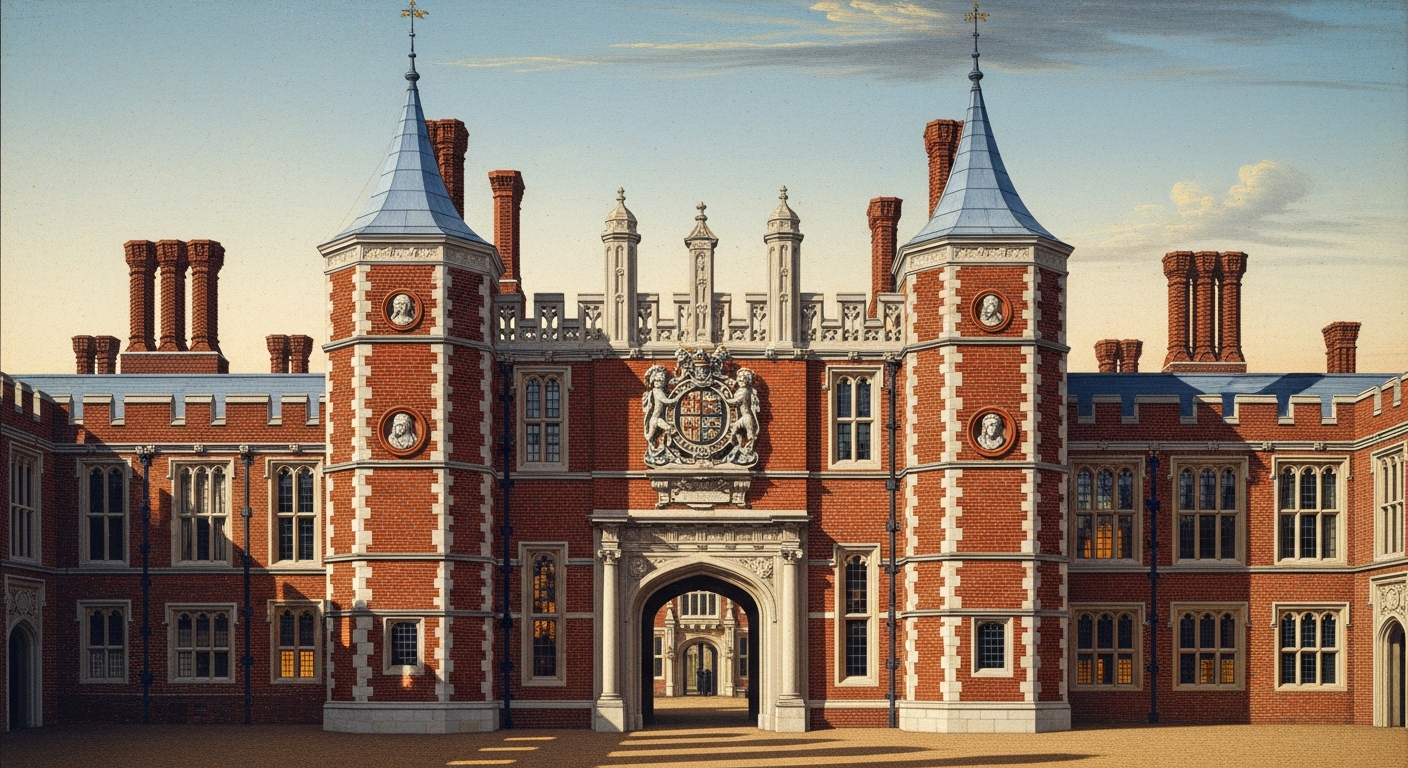
In the dead of night at Hampton Court Palace, a desperate man crept through the royal apartments with kidnap on his mind. The year was 1549, and that man was Thomas Seymour, Baron Seymour of Sudeley, uncle to the boy king Edward VI and one of the most ambitious men in Tudor England. His reckless attempt to seize his nephew would not only cost him his life but also demonstrate just how precarious power could be in the aftermath of Henry VIII’s death.
Thomas Seymour’s story reads like something from a political thriller: a man driven by ambition to commit an act so audacious that it shocked even the hardened political operators of the Tudor court. His unauthorised intrusions into the young king’s private chambers at Hampton Court, culminating in his execution for high treason, represent one of the most dramatic examples of overreach in Tudor history.
This fascinating episode reveals the dangerous game of power politics that surrounded the child king Edward VI, the lengths to which ambitious nobles would go to secure influence, and the swift justice that awaited those who threatened the crown. But who was Thomas Seymour, and what drove him to such desperate measures?
Historical Background
Thomas Seymour was born around 1508 into a family that would become central to Tudor history. His sister Jane became Henry VIII’s third wife and mother to Edward VI, whilst his elder brother Edward became Duke of Somerset and Lord Protector during Edward VI’s minority. However, Thomas Seymour was not content to remain in his brother’s shadow.
Following Henry VIII’s death in January 1547, nine-year-old Edward VI ascended the throne with his uncle Edward Seymour appointed as Lord Protector. This arrangement left Thomas Seymour, despite his elevation to Baron Seymour of Sudeley and his appointment as Lord Admiral, feeling excluded from real power. The situation became even more complex when Thomas secretly married Henry VIII’s widow, Katherine Parr, in 1547, a move that required royal permission but which they undertook without consultation.
The political landscape of 1548-1549 was particularly volatile. Edward Seymour’s position as Lord Protector was increasingly unstable, facing criticism over his handling of various crises including Kett’s Rebellion and the war with Scotland. Thomas Seymour saw an opportunity to advance his own position by gaining direct access to his royal nephew, believing that if he could influence the young king, he might supplant his brother as the power behind the throne.
It was against this backdrop that Thomas Seymour began his ill-fated scheme. According to the Acts of the Privy Council of England, Seymour made several unauthorised visits to the royal apartments, including at Hampton Court Palace. These intrusions were not casual visits but calculated attempts to reach the king without the knowledge or approval of the Lord Protector or the Privy Council. Historical accounts suggest these visits caused considerable alarm amongst the household, with Seymour’s nocturnal wanderings through the palace creating an atmosphere of fear and suspicion.
Significance and Impact
Thomas Seymour’s attempted kidnapping of Edward VI represented far more than a family dispute, it struck at the very heart of Tudor governance and the delicate balance of power surrounding a child monarch. The incident highlighted the vulnerability of the young king and the potential for ambitious courtiers to exploit the regency system for personal gain.
The political ramifications were immediate and severe. Seymour’s actions provided his enemies at court with the perfect opportunity to remove him permanently from the political scene. His arrest in January 1549 and subsequent execution in March of the same year sent a clear message that threats to the crown, regardless of family connections, would be met with the ultimate punishment. As historian Linda Porter notes in ‘Katherine the Queen: The Remarkable Life of Katherine Parr’, this episode demonstrated the ruthless pragmatism of Tudor politics, where even blood relations to the monarch could be sacrificed for political stability.
Perhaps more significantly, the affair contributed to the broader instability that would eventually lead to Edward Seymour’s own downfall as Lord Protector later in 1549. The scandal surrounding his brother’s treasonous activities weakened Edward Seymour’s position considerably, as it raised questions about his ability to maintain order even within his own family. This instability ultimately paved the way for John Dudley, Earl of Warwick (later Duke of Northumberland), to seize control of the government.
The incident also had lasting implications for royal security. The ease with which Thomas Seymour had been able to access the royal apartments highlighted serious deficiencies in palace security arrangements. Subsequent measures were implemented to better protect the young king, including stricter controls on access to the royal presence and enhanced surveillance of the royal household.
Connections and Context
Thomas Seymour’s downfall must be understood within the broader context of the power struggles that characterised Edward VI’s reign. The period between Henry VIII’s death in 1547 and Edward’s own death in 1553 saw constant jockeying for position among the nobility, with various factions seeking to control the young king and, through him, the kingdom itself.
The Seymour brothers’ rivalry mirrors other instances of fraternal conflict in Tudor history, most notably the relationship between Henry VIII and his various companions and advisors. It also foreshadows the later struggle between different court factions during Edward’s final years, particularly the conflict between the Duke of Northumberland and Princess Mary’s supporters over the succession.
Interestingly, Thomas Seymour’s fall occurred during the same year as several other major crises. Kett’s Rebellion in Norfolk, the Prayer Book Rebellion in Devon and Cornwall, and ongoing military campaigns in Scotland and France created a perfect storm of political instability. These multiple challenges stretched the government’s resources and authority, making Seymour’s additional threat to royal security even more serious in the eyes of the Privy Council.
The timing of Seymour’s execution is also significant when considered alongside contemporary European politics. The year 1549 saw various succession crises and minority governments across Europe, making the English government acutely aware of the need to demonstrate strength and stability in the face of potential foreign intervention or domestic unrest.
Modern Relevance and Fascinating Details
Did you know that Thomas Seymour’s case represents one of the few instances where a member of the immediate royal family circle was executed for attempting to kidnap a reigning monarch? This extraordinary circumstance makes his story particularly compelling for modern audiences interested in the darker aspects of Tudor court politics.
The incident has captured the imagination of historical fiction writers and television producers, appearing in various forms across popular culture. The dramatic nature of the midnight intrusions, combined with the family betrayal aspect, provides rich material for exploring themes of ambition, loyalty, and the corrupting influence of power that resonate with contemporary audiences.
From a modern security perspective, Thomas Seymour’s ability to repeatedly access the royal apartments without detection seems almost inconceivable. However, Tudor palaces operated very differently from modern royal residences, with hundreds of courtiers, servants, and officials having legitimate reasons to move through various parts of the buildings. This made it much easier for someone with Seymour’s status and connections to exploit security weaknesses.
The psychological aspects of Seymour’s behaviour also provide fascinating insights into the mindset of Tudor courtiers. His willingness to risk everything for a chance at greater power reflects the high-stakes nature of court life, where the rewards for success were enormous but the penalties for failure were often fatal. Modern historians have debated whether Seymour’s actions reflected genuine political calculation or increasing desperation bordering on recklessness.
Historical Fiction
My own series of novellas (Divination, Speculation, and the soon to be released, Restitution) all focus on Thomas Seymour as the arch-villain. His jealousy and jockeying for position make him the ideal mystery fiction antagonist – in fact it’s hard to imagine more dastardly antics than those he committed in real life!
Conclusion
Thomas Seymour’s attempted kidnapping of Edward VI stands as one of the most audacious and ultimately self-destructive acts in Tudor history. His midnight wanderings through Hampton Court Palace and other royal residences represented not just a personal tragedy but a pivotal moment that helped reshape the political landscape of mid-sixteenth-century England. The incident demonstrates how quickly fortunes could change in the Tudor court and how even the most privileged positions offered no protection against the consequences of overreaching ambition.
The story continues to fascinate historians and general readers alike because it encapsulates so many themes central to the Tudor experience: the vulnerability of child monarchs, the ruthless competition for power among the nobility, and the ultimate supremacy of royal authority over personal relationships. For anyone interested in understanding the complexities of Tudor politics or the human cost of political ambition, Thomas Seymour’s rise and fall provides a compelling case study that illuminates the dangerous game of power that defined one of England’s most dramatic historical periods.